Timothy Pont’s portrayal of towns
| < Timothy Pont – 1590 | Δ Maps | Robert Gordon 1640 > |
by E. Patricia Dennison
Pont’s depictions of towns tell us a great deal about Scotland’s medieval urban settlements. Scottish towns were small; and some have even argued that there was little to distinguish a Scottish town from a village. But there were, in fact, special characteristics that made a town a town; these were immediately recognisable to medieval and early modern men and women – just as they were to Pont.
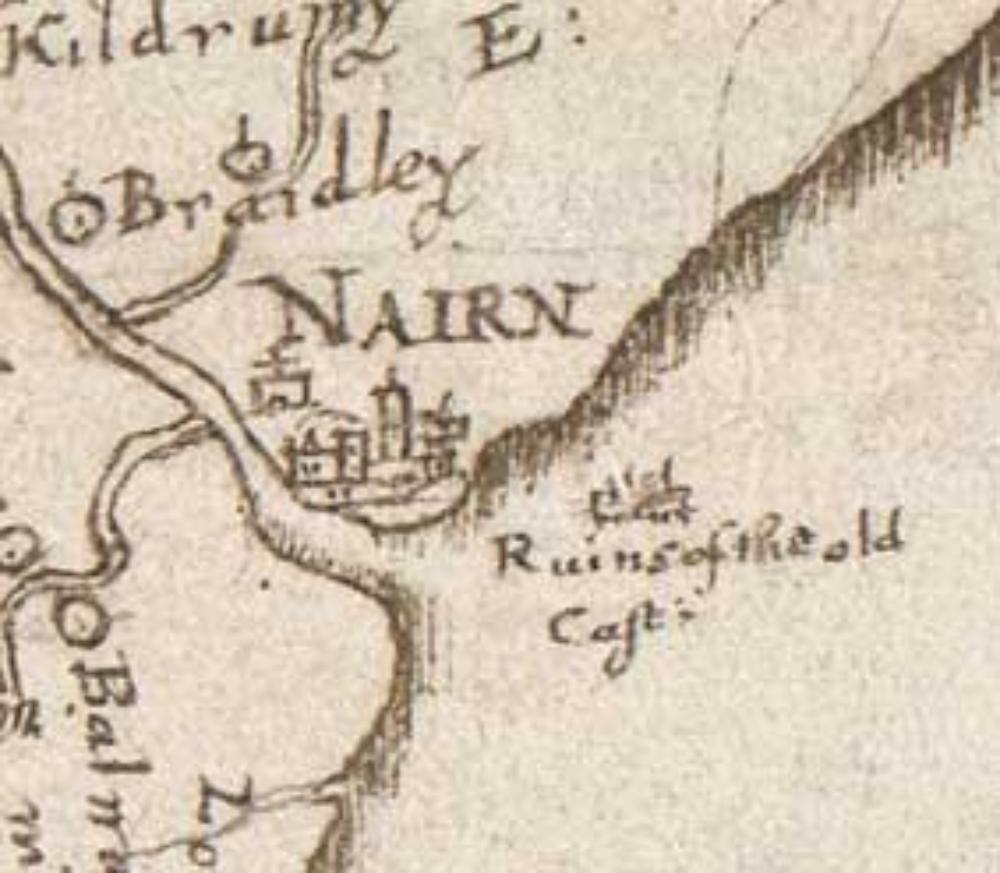
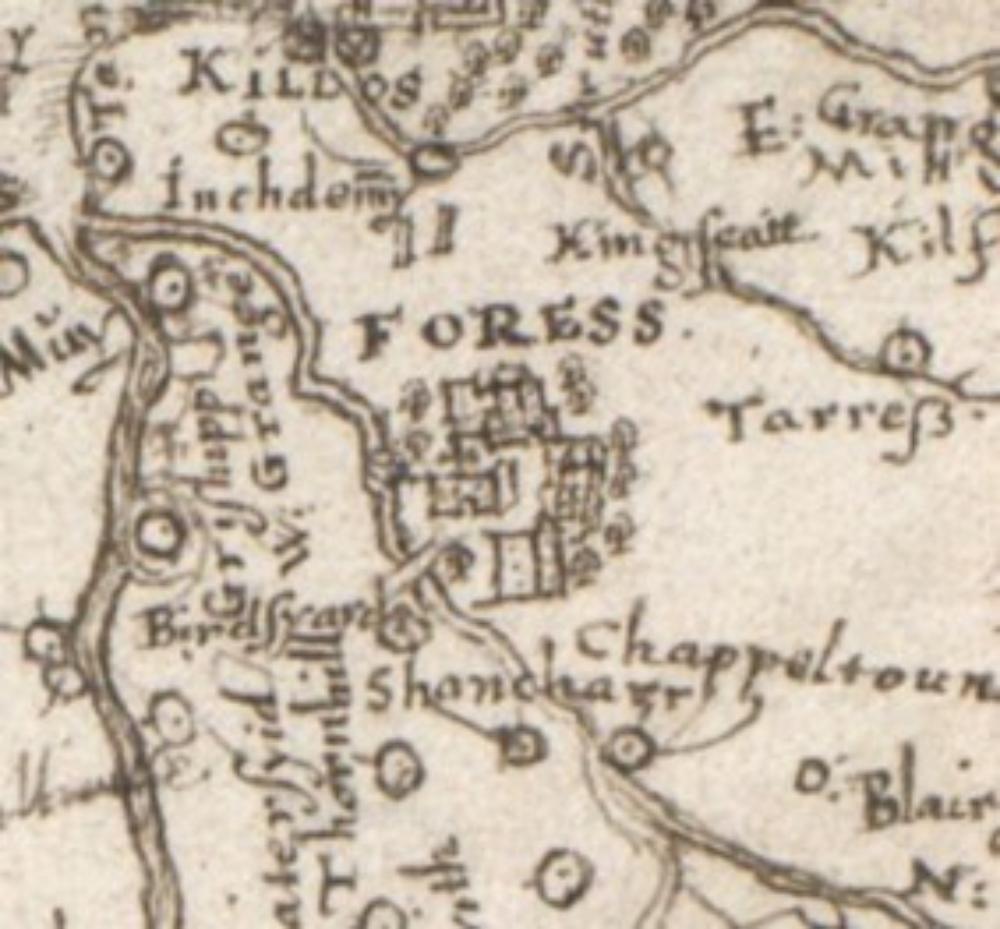
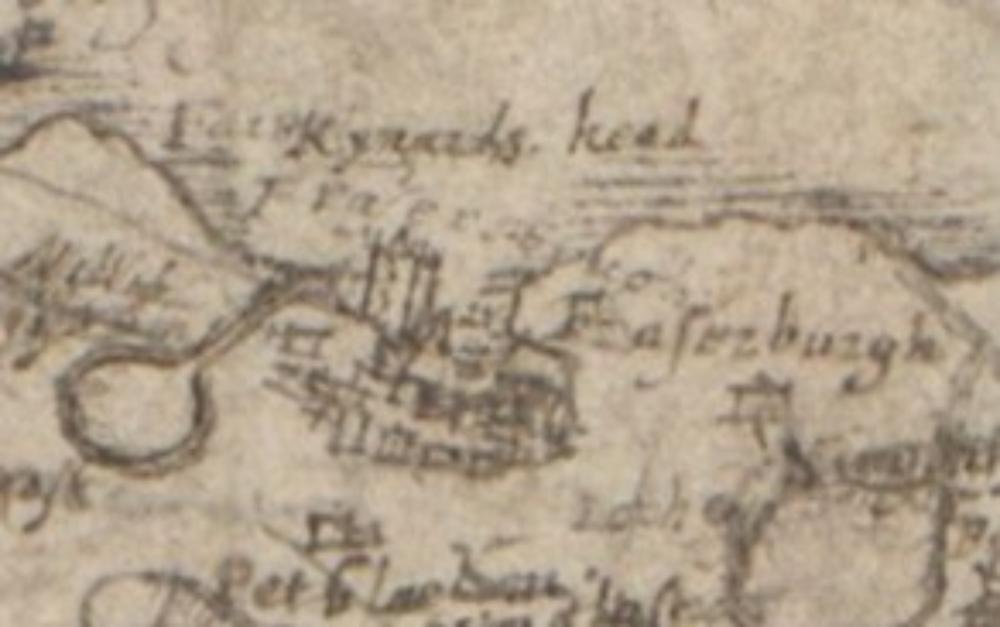
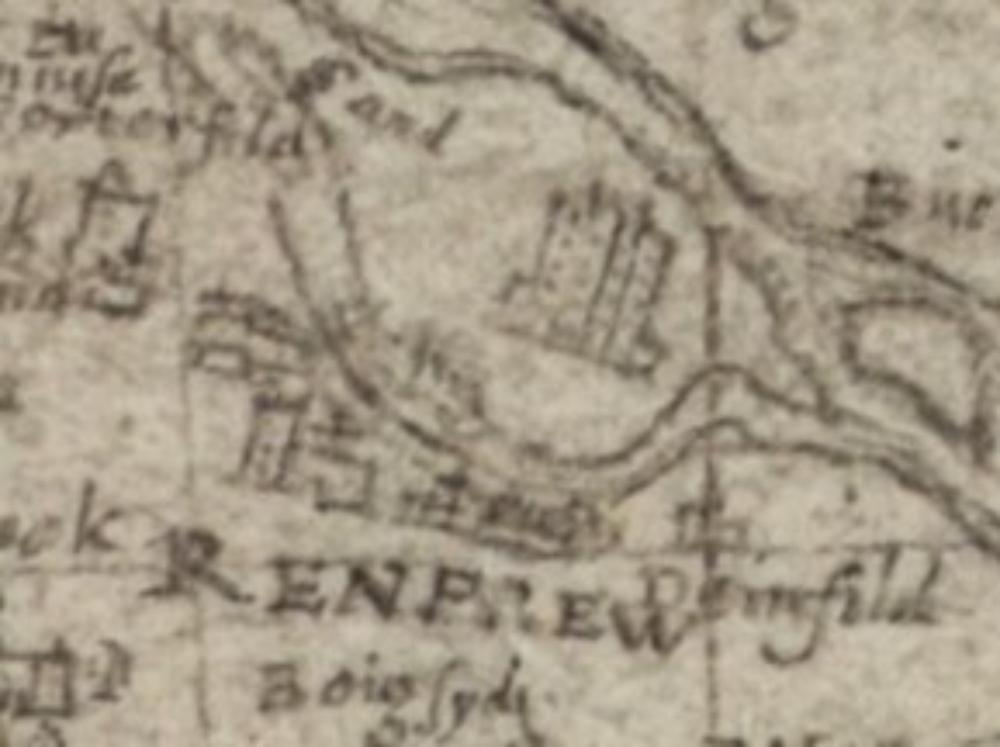
Towns are highlighted on the landscape by Pont, often with the added notation of their names being inscribed in capital letters.
Nairn, Forres, Fraserburgh, Renfrew and Biggar, for example, stand out from the surrounding countryside.
 Nairn
Nairn
 Forres
 Fraserburgh
 Renfrew
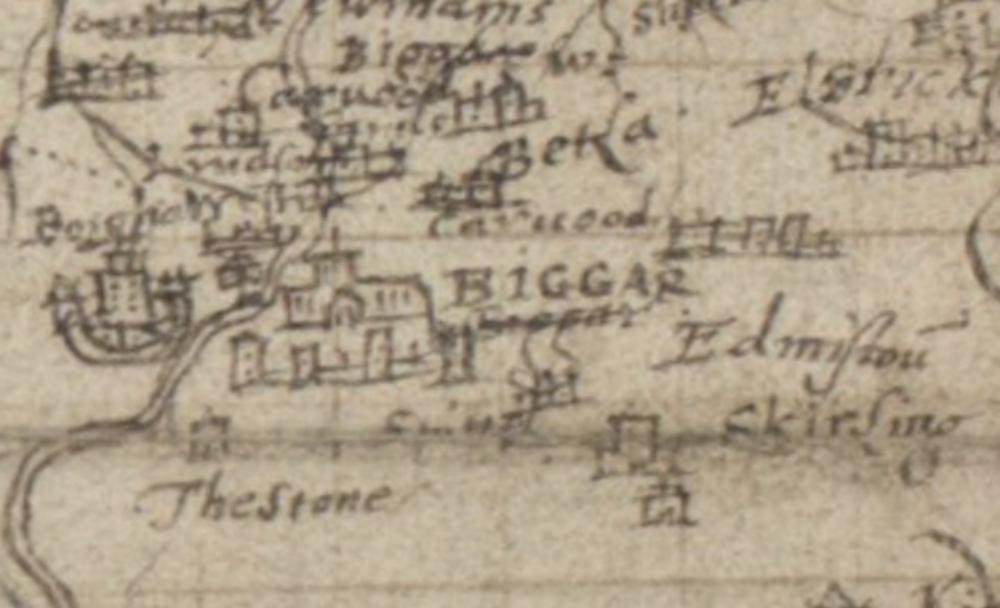 Biggar
Street Patterns
That many of these small towns were still basically of the medieval pattern – a single street settlement – can be seen clearly on a number of the manuscripts. Forfar, Biggar, Rutherglen and Lanark, for example, are all depicted as having one major street.
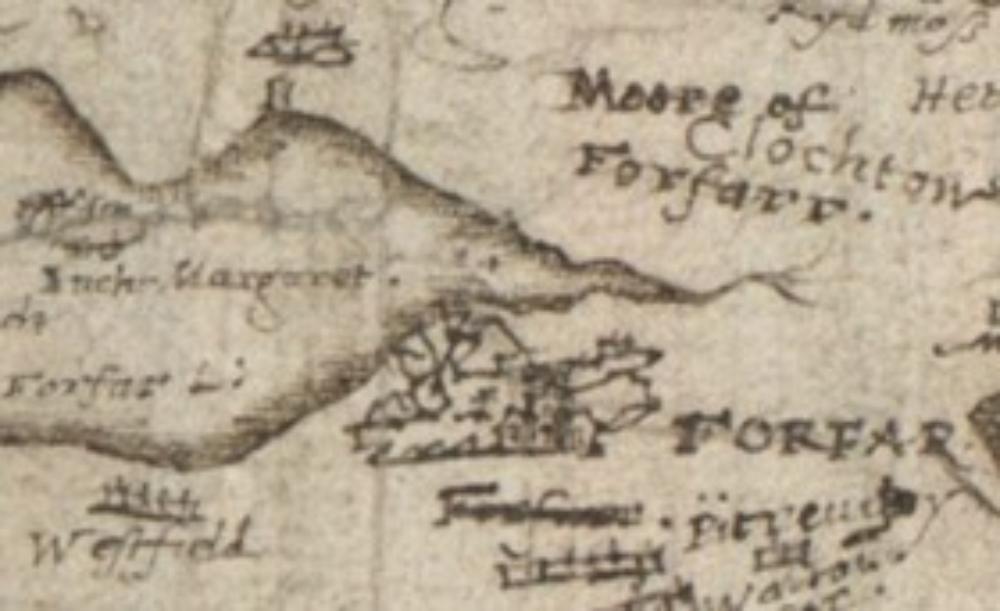 Forfar
Biggar
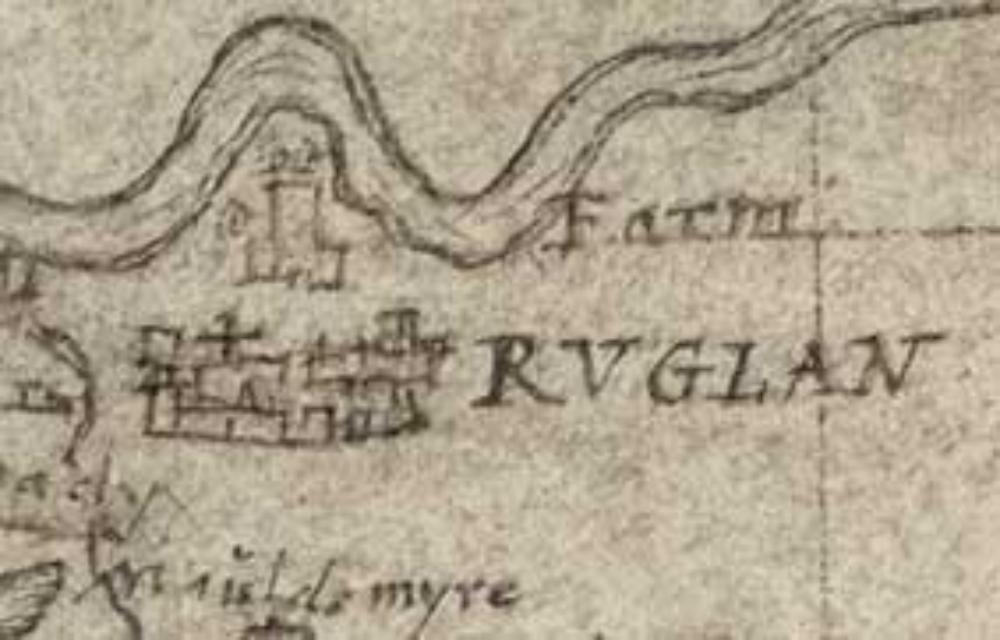 Rutherglen
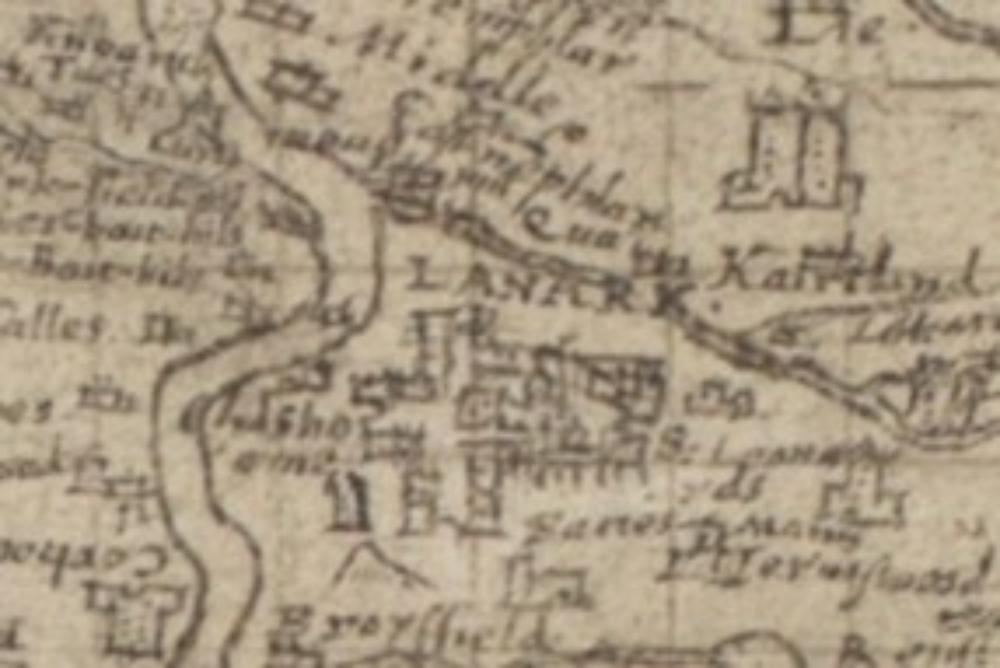 Lanark
Glasgow however, already showing signs of growing economic importance, had developed a cruciform street pattern; and Dundee exhibited the complex lay-out of a long-established burgh (a town with specific legal privileges) of considerable wealth and trading influence.
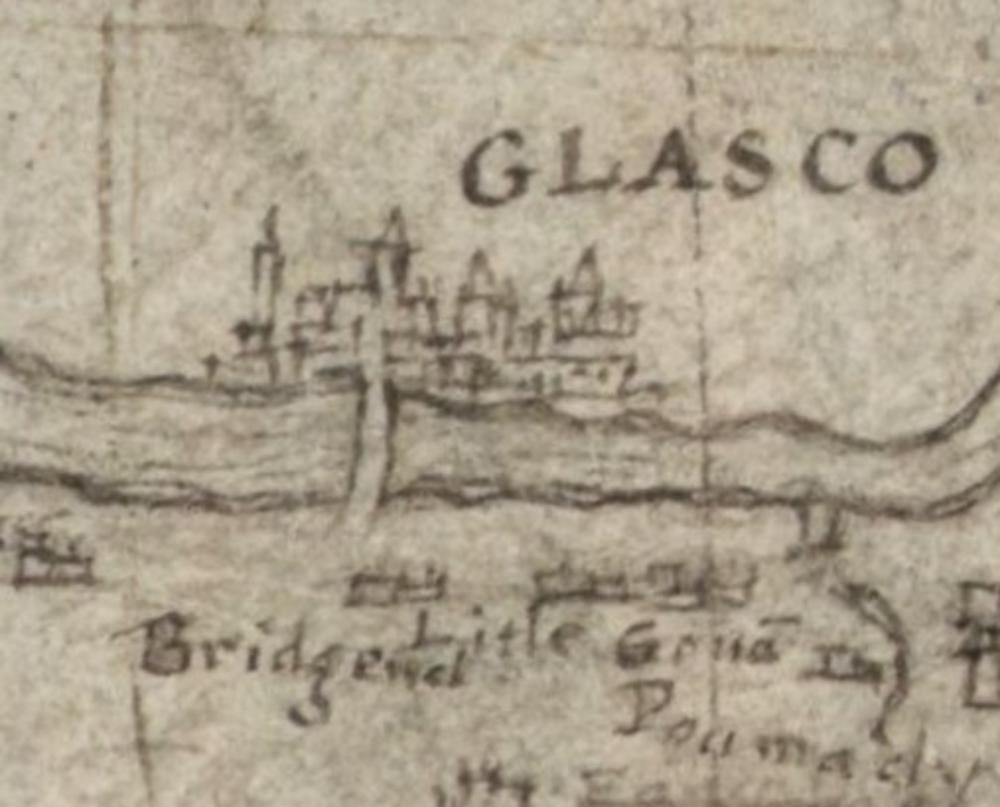 Glasgow
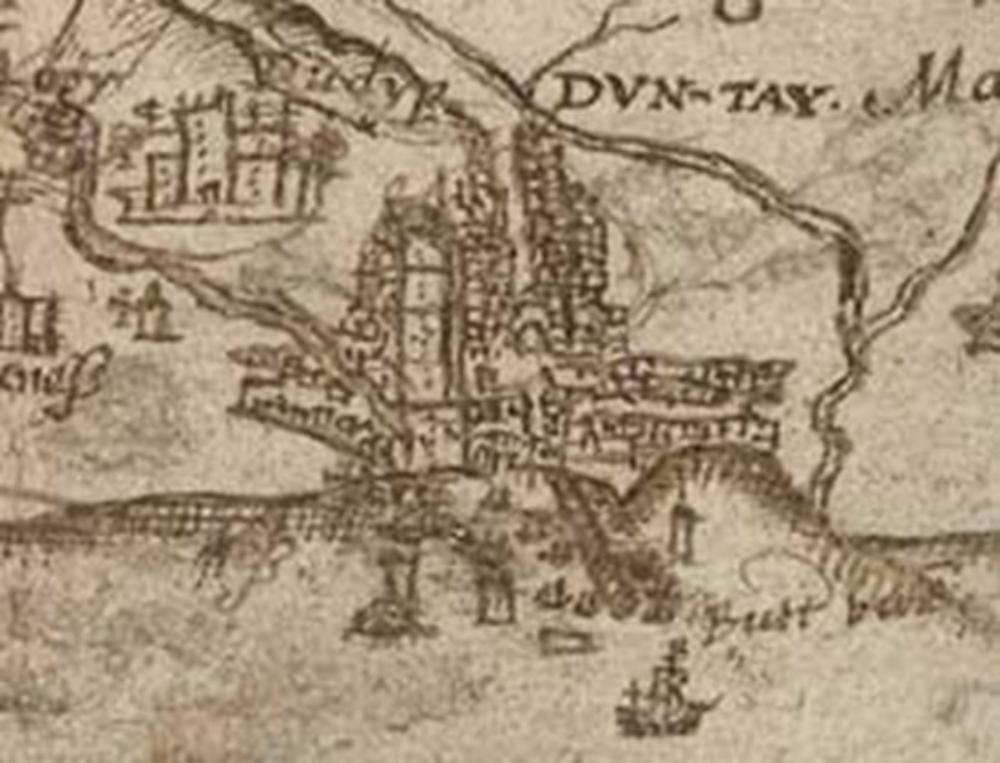 Dundee
Burgage Plots
Closely associated with this street pattern were the burgage plots, or tofts. These were the portions of land which the burgesses were allocated. Here, they built their dwellings, sank their wells, dug their midden pits, reared animals and grew vegetables, and housed their workshops. The tofts can be studied on Pont’s maps. Paisley, Rutherglen, Hawick, Forfar and Dumfries, for example, display the classic herringbone pattern of burgage plots running back from the main street frontage.
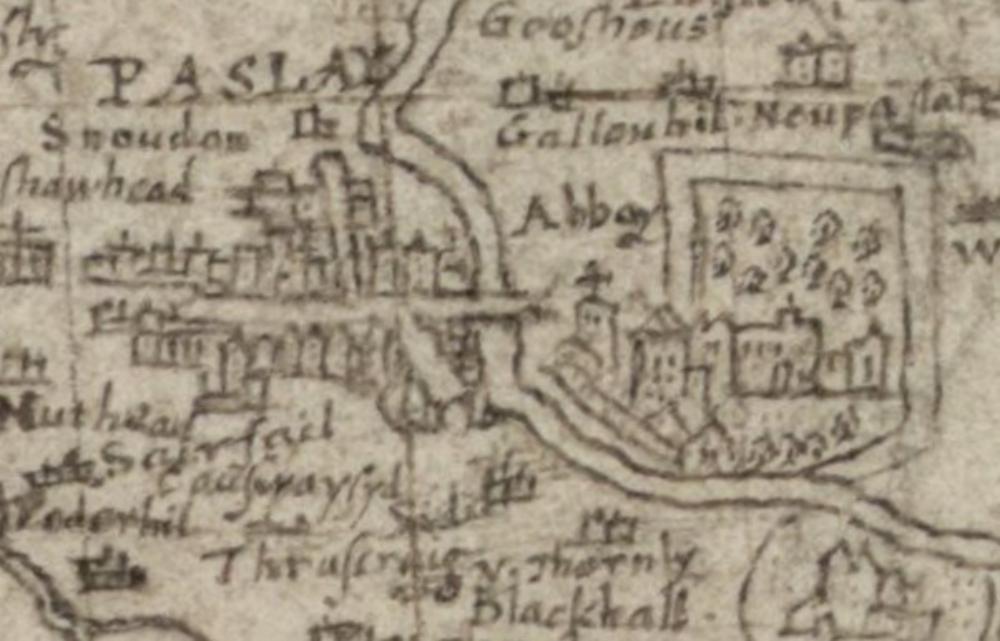 Paisley
Rutherglen
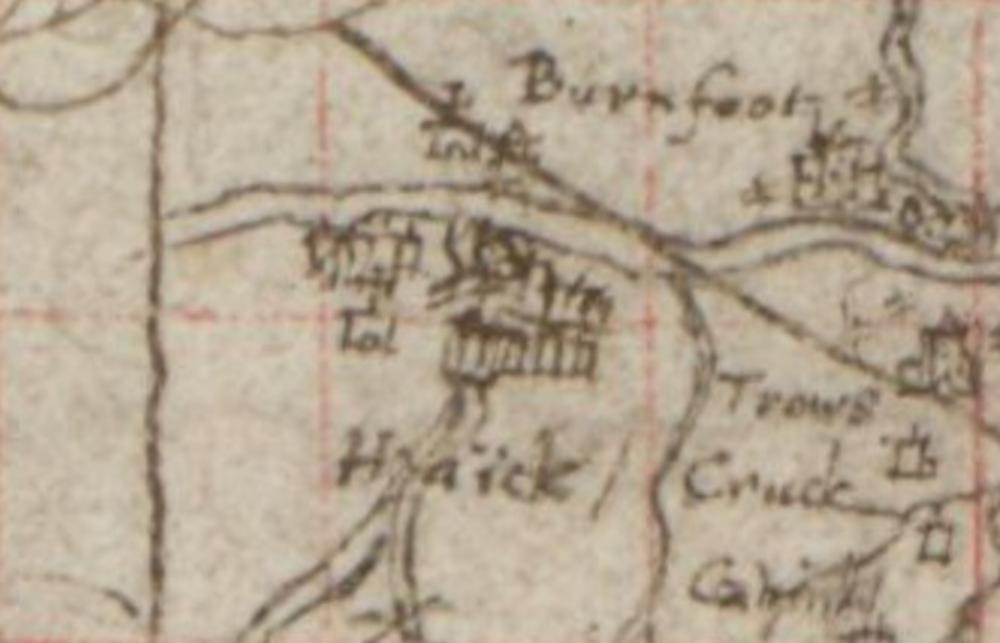 Hawick
Forfar
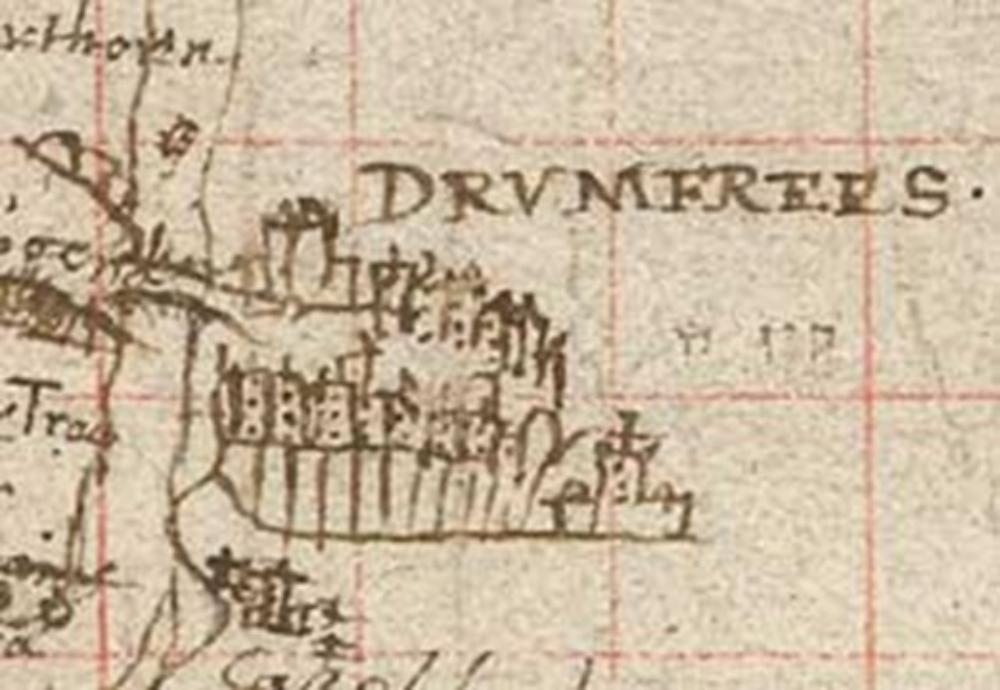 Dumfries
Town Limits – walls and stockades
Towns set themselves apart from the countryside by built features; one of the most important, psychologically, being the demarcation of the town limits. Stirling was one of the few Scottish towns to be stone-walled. This Pont depicts clearly and boldly with a double line, a device he uses on his first draft of Perth, another rare stone-walled town.
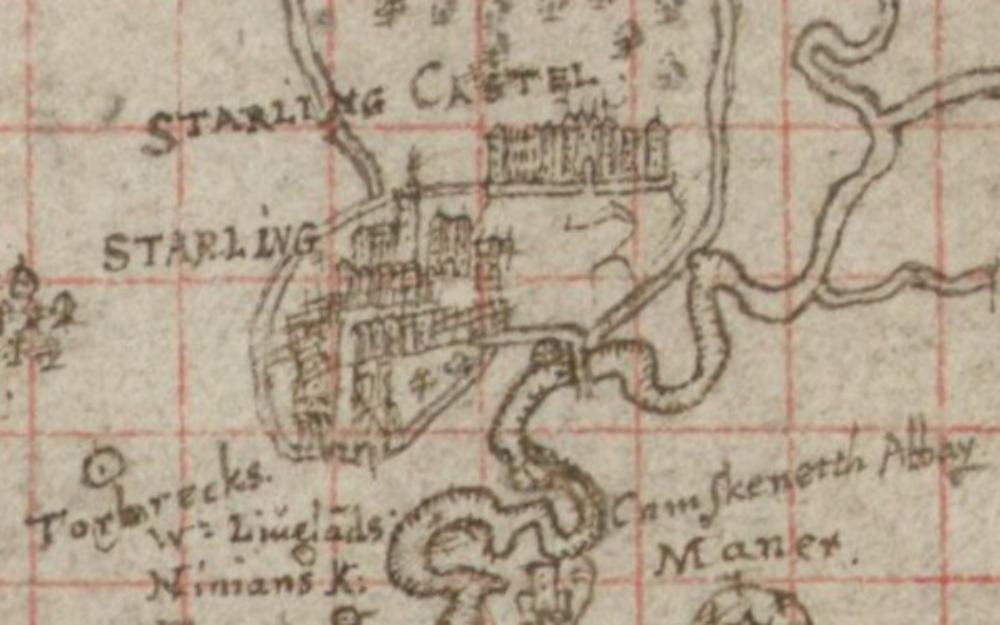 Stirling
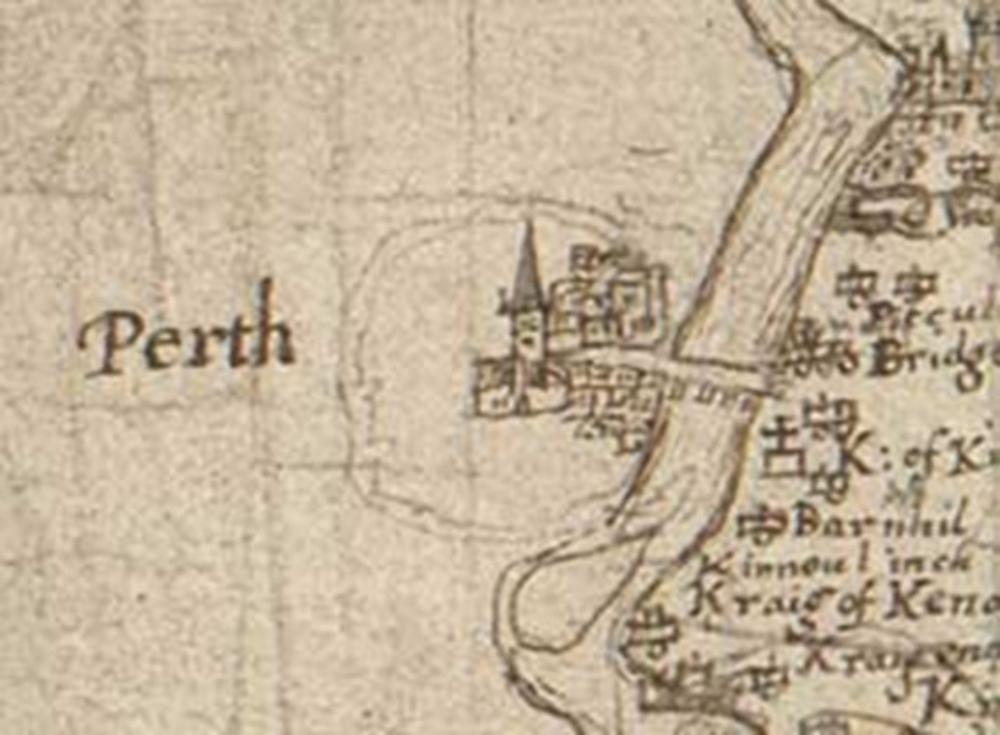 Perth
Perth
Sanquhar, a town enclosed by only the traditional ditch and wooden palisade is illustrated equally precisely with merely a single encircling line.
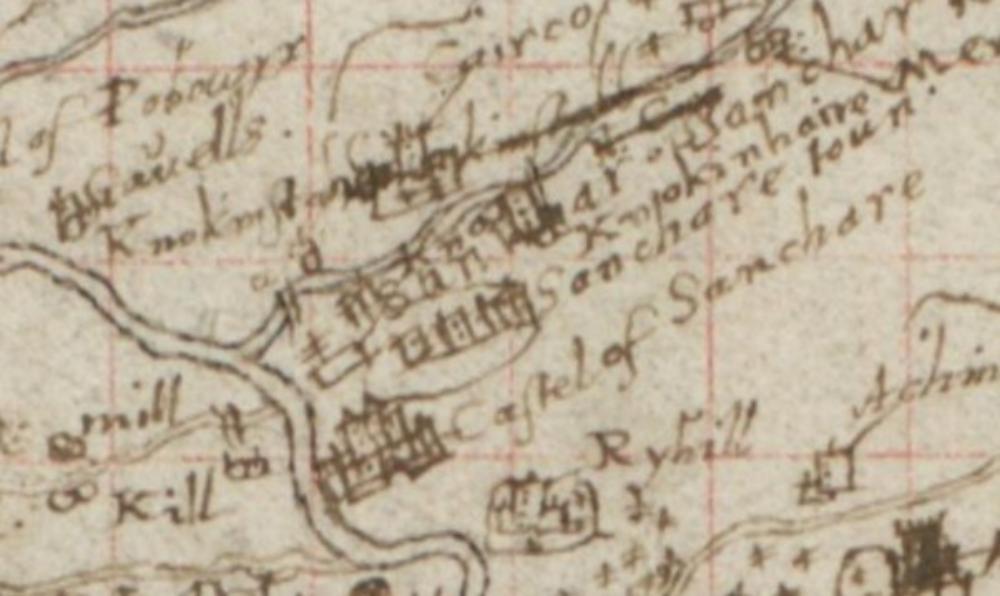 Sanquhar
Tain and Dornoch are likewise set apart from the surrounding countryside, suggesting that they were physically delineated by only a ditch and/or small wooden palisade.
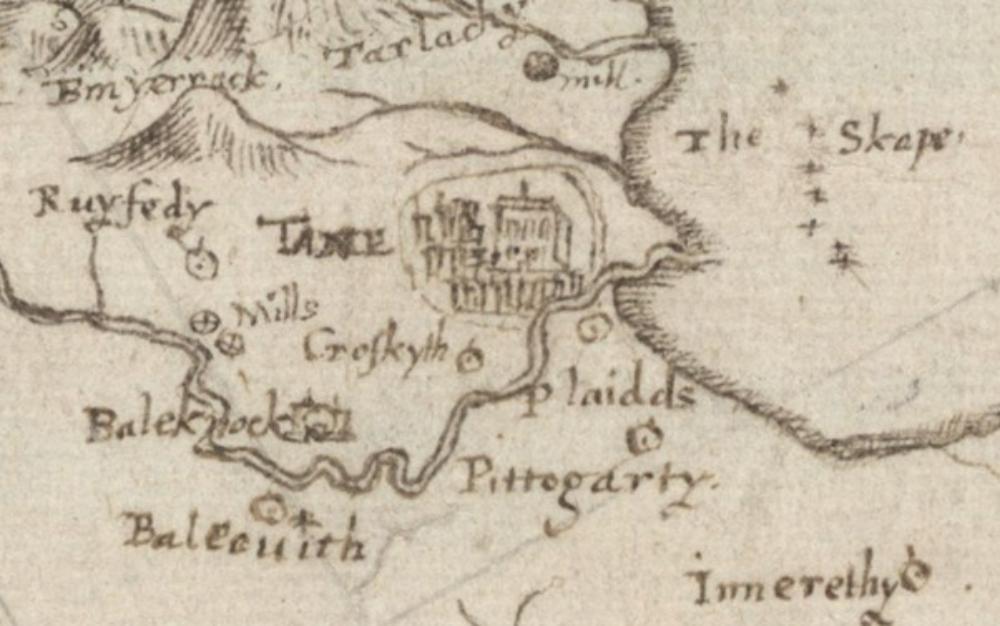 Tain
Tain
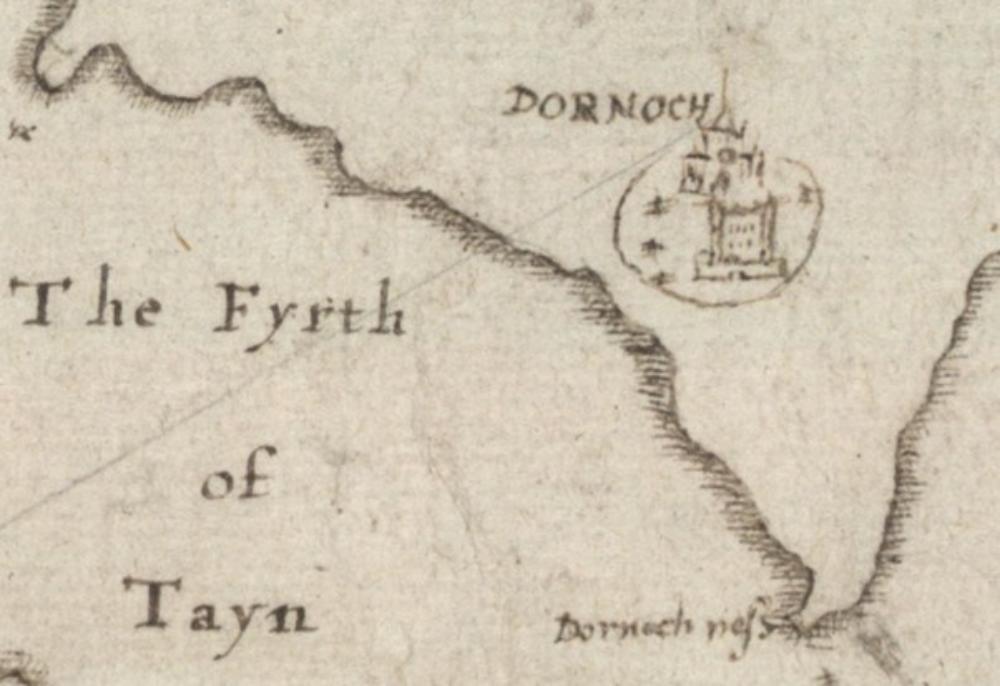 Dornoch
Town gates
Entrance to the town was through the town gates, or ports. Elgin’s ports are delineated accurately and show that they were constructed in the form of an arch.
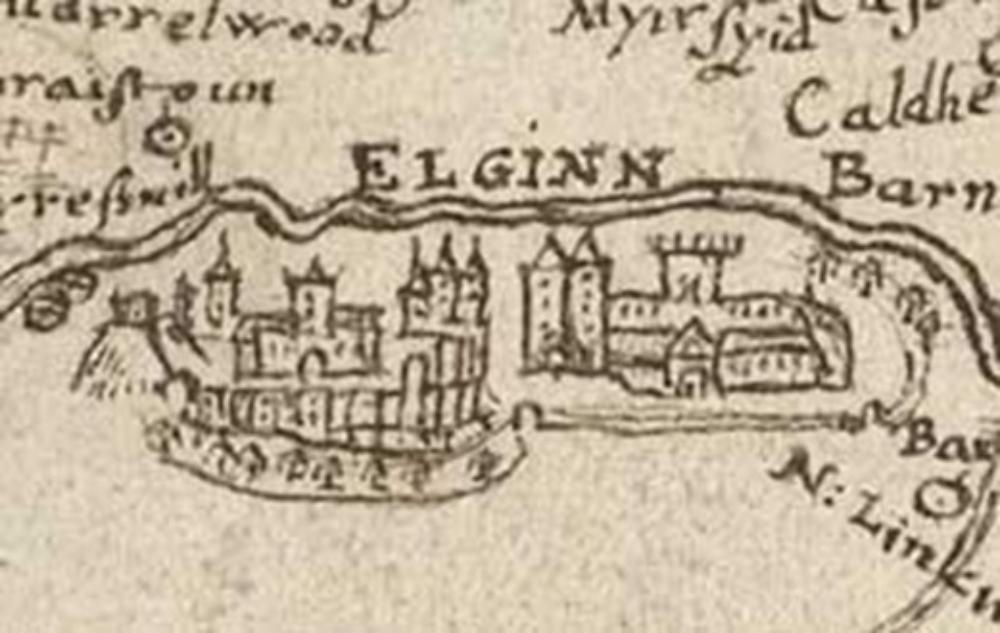 Elgin
Elgin
The same is true of Lanark, Hamilton, Dumfries, Glasgow and Hawick. Late sixteenth-century documents give no details of the exact construction of town ports.
Lanark
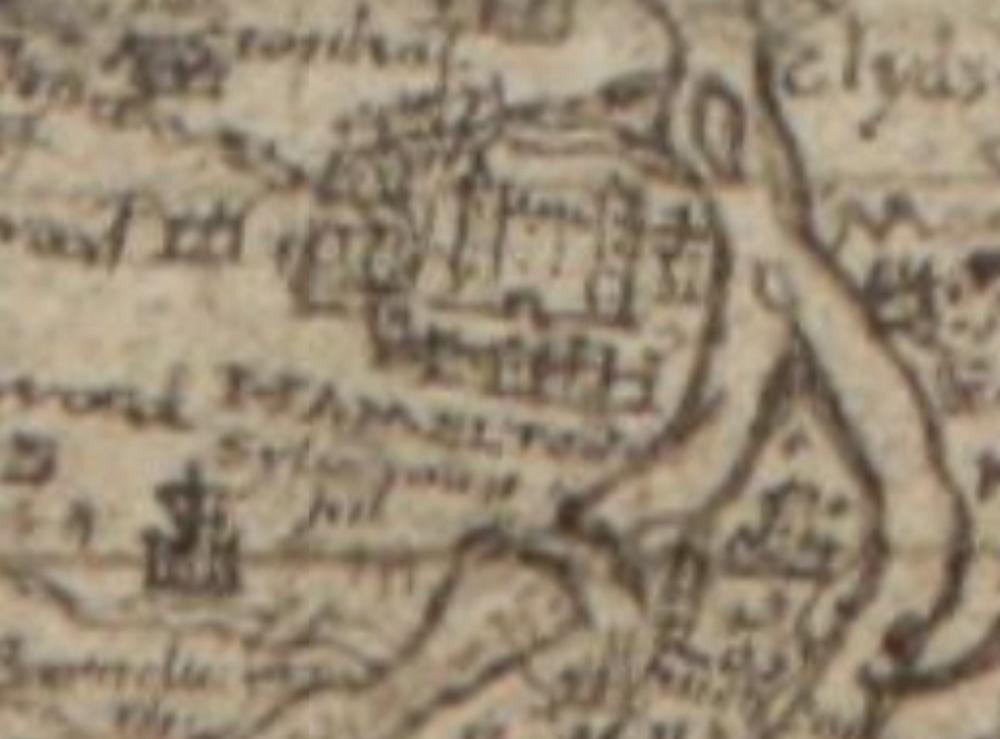 Hamilton
Dumfries
Glasgow
Hawick
It is, therefore, interesting to wonder whether Stirling’s Barras-Yett, known to have been a massive structure, was, in fact, a double archway, as Pont’s delineation seems to suggest.
Market places and market crosses
Pont was acutely aware of the physical dominance of the market place and its associated buildings. The spaces, where booths and stalls were set up, may be seen clearly on his views, for example, of Lanark, Biggar, Rutherglen and Dumfries. Perhaps more precise, although less frequent, are his interpretations of market crosses, as may be noted in Glasgow and Dumfries, marked very clearly, with the symbol of a cross.
Lanark
Biggar
Rutherglen
Dumfries
Glasgow
Tolbooths
Most burghs had tolbooths. These functioned as the collection point for market tolls, as the repository of the market weights, as the town jail and as the home of the burgh council. That of Dumfries is shown close by the market cross and the view of Glasgow from the south delineates clearly its tolbooth. Nairn’s tolbooth features prominently on the townscape, as befitted a building which also functioned as the meeting place for the sheriff court.
Dumfries
Nairn
Churches
It was, perhaps, inevitable that Pont, as the son of a minister, would see parish churches as an integral part of the urban scene. Nairn’s St. Ninian’s Church and Perth’s St. John’s Church, for example, are drawn with great clarity, as is the parish church of Dundee, dedicated to St. Mary.
Nairn
Perth
Dundee
The sheer dominance of the latter on the townscape confirms the impressiveness of the old medieval church.
Pont’s depictions of towns at the turn of the sixteenth and seventeenth centuries are essential primary sources for any study of the urban history of the period. They offer a unique insight into Scotland at a specific moment in time.
| < Timothy Pont – 1590 | Δ Maps | Robert Gordon 1640 > |